What To Do With The 0 to 2’s

What To Do With 0 to 2?

Ideas for Embedding Indigenous Perspectives in Very Early Childhood in Music Education


Get different sounds and voices into their ears, minds and hearts.

Some music that could be included for background music include the pieces listed below. They can be purchased from Itunes and put onto your room’s playlists or burn to a CD or put on a USB. Mix it up with what you currently use.


Active Indoor Play

All these tracks are great for dancing. This could be in the arms or laps of an adult. It could be during tummy time or mastering sitting up, crawling and standing.

  • Song To Sing – Archie Roach
  • Ir Anthawirriyanna a-Kurna (The Saltwater People Song) – Shellie Morris
  • Treaty – Yothu Yindi
  • Everyday My Mother’s Voice – Dan Sultan and Paul Kelly
  • Raining On The Rock – Warren H Williams and John Williamson
  • From Little Things Big Things Grow – Paul Kelly and Kev Carmody
  • Australia– Dan Sultan and The Wiggles
  • Gundalla (We Dance) Yabu Band
  • The Monkey and the Turtle – Christine Anu
  • Innanay – Tiddas

Sleep or Quiet Time

All these tracks are perfect for chillaxing.

  • She Moved Through The Fair – Amy Dickson and William Barton
  • A Child Was Born Tonight – Archie Roach
  • Yorta Yorta Man – Jimmy Little
  • Wiyathul – Gurramul
  • Blue Bay Blues – Pigram Brothers
  • Milyakburra – Emily Wurramara
  • The Irex – Mission Songs Project
  • Home – Troy Cassar-Daley
  • Yellow Bird – Jessica Mauboy and Lou Bennett
  • Ngarra Burra Ferra – Jessica Mauboy, Lou Bennett et al

Sensory Play, Music Making – auditory, tactile and visual feasts

Tap, scrape or shake different items such as saucepans, plastic bowls, cups, empty cardboard boxes.  Aim for a variety of materials, surfaces and sounds. Use wooden spoons or other kitchen utensils to strike the previously mentioned items to make ‘kitchen music’.

Songs you could play to enhance the kitchen music experience could be ‘Down in the Kitchen’ by Mission Songs Project or ‘Goin’ Back Home’ by Pigram Brothers.


Babies can use musical instruments too. Sturdily made appropriate for the age group are recommended.

The instrument set for babies pictured is put together as a partnership between instrument makers Remo and Lynn Kleiner, an early childhood music educator guru from the USA.  I was lucky enough to complete her training in Melbourne about 8 years ago. These instrument sets can be purchased through Optimum Percussion based in New South Wales. The sets are expensive at around $99 but are good quality and easily cleaned for hygiene reasons which is so important for our most vulnerable children.   https://www.optimumpercussion.com.au/index.php/remo-lynn-kleiner-babies-make-music-kit


Model and assist the babies with some simple rhythms. Try playing a rhythm with them and let them have a go themselves.


See what the children can do.  Reward any approximation. Give them time and creative space. You will be surprised what they can do.


Action Song Hickory Dickory Dock

This is a baby tactile workout inspired by Baker Boy’s ‘Hickory Dickory Dock’ from Playschool earlier this year and an activity from Baby Intellidance.

It involves babies experiencing the singing of the rhyme and accompanying actions of fingers running, gentle hands squeezing, finger tips brushing and gentle fingers poking.

Hickory dickory dock

The mouse ran up the clock (Fingers run up baby from toes to head)

The clock struck one (grasp baby’s hands and clap them together)

The mouse ran down (Fingers run down baby from head to toes)

Run puddy puddyy run x 2 (tickle baby all over)

The clock struck one the mouse ran down (Fingers run down baby from head to toes)

Hickory dickory dock (lightly take hold of baby’s feet)

Verse 2

Hickory dickory dock

The mouse squeezed up the clock (Gently squeeze baby from feet to cheeks)

The clock struck two (grasp baby’s hands and clap them together twice)

The down the mouse squeezed too (Gently squeeze baby from cheeks to feet)

Hickory Dickory Dock (lightly take hold of baby’s feet)

Run puddy puddy run x 2 (tickle baby all over)

The clock struck two the mouse ran down (Fingers run down baby from head to toes)

Hickory dickory dock (lightly take hold of baby’s feet)

Verse 3

Hickory dickory dock

The mouse brushed up the clock (Gently brush finger tips up baby in short light strokes)

The clock struck three (clasp baby’s hands and clap them together three times)

Down brushed he (Gently brush finger tips down baby in short light strokes)

Hickory Dickory Dock (lightly take hold of baby’s feet)

Run puddy puddy run (tickle baby all over)

The clock struck three and down ran he (Fingers run down baby from head to toes)

Hickory dickory dock (lightly take hold of baby’s feet)

Verse 4

Hickory dickory dock

The mouse poked up the clock (gently poke baby from feet to neck)

The clock struck four (clasp baby’s hands and clap them together four times)

and mouse poked for more (gently poke baby from neck to feet)

Hickory dickory dock

Run puddy puddy run (tickle baby all over)

The clock struck four and he poked for more (Fingers run down baby from head to toes)

Hickory dickory dock (lightly take hold of baby’s feet)


Counting on Cassowary Country  – to tune of Mary Had A Little Lamb

One large cassowary walking on the beach,

walking on the beach, walking on the beach.

One large cassowary walking on the beach,

We can count on Country.


Two lucky herons flying out of reach… we can count on Country.

And so on…

Story Time – ‘Ten Scared Fish’

‘Ten Scared Fish’ is by Ros Moriarty and illustrated by Balarinji. This early childhood concept book introduces animals and numbers and celebrates indigenous art in a playful way. I suggest ‘reading’ the book to the tune of ‘Belle Mama’. For several decades ‘Belle Mama’ had been attributed to the Torres Strait Islands by American soldiers who had heard it when they were serving in the area during World War Two. More recently it seems to be originally from Cameroon in Africa and has travelled to the islands and the south of Papua New Guinea.


For Aboriginal people ‘songlines’ are the paths across the land, and sometimes sky, which mark the route followed by creators during the Dreaming. The paths of the songlines are recorded in traditional songs, stories, dance, and painting. Some songlines traverse hundreds of kilometres through lands of many different indigenous peoples — peoples who may speak markedly different languages and have different cultural traditions.  These songlines are the ‘maps’ for a culture.


Following the concept of ‘songlines’ concept of songs travelling across different countries and different language groups I suggest celebrating the animals of Australia using the tune of a song adopted by the Torres Strait Islander people.

Story Time – ‘Lullaby and Goodnight’

Taken from the text of the book Lullaby and Goodnight by L Crumble

Lullaby and goodnight

In the red sky twilight

Soft caress, beating heart

We will never be apart.


Go to sleep little one

Feel the warmth from the sun

Fading light, deep embrace

A sleepy smile on your face.


The book is not by Aboriginal authors or illustrators. It is accompanied by a CD of Miranda Tapsell singing the text of the book to the tune of the Brahm’s classic Lullaby and Goodnight.  It is lovely. Miranda is a Logie winning actress and a Larrakia woman. The Larrakia people are from in and around Darwin. The book celebrates all the beauty of the flora and fauna of Aboriginal lands. A great musical educational experience for your children would be for you to sing the book to the Brahms tune like Miranda does.


Alternatively, the text of the book could be sung to a different tune like ‘Mumma Wurrano’. This is an Aboriginal lullaby which is also referred to as the ‘Maranoa Lullaby’. It is from the Maranoa people of southern Queensland.  There are public recordings of Aboriginal tenor Harold Blair performing the song in the 1950s and other vocal and instrumental recordings through to the present day.  Below is a video of me singing the text of the picture book to the tune of Maranoa Lullaby and finishing the ‘reading’ with the original lyrics.

References

https://singforjoy.ca/origins-song-oral-tradition/

https://www.australianmusiccentre.com.au/work/sculthorpe-peter-maranoa-lullaby

https://en.wikipedia.org/wiki/Songline

https://www.youtube.com/watch?v=q0NHsbjlvdE – Intellidance Babies program Hickory Dickory Dock


The Lady Sings The Blues – Kankawa Nagarra (also known as Olive Knight)

The Lady Sings The Blues –  Kankawa Nagarra also known as Olive Knight


This week we will look at one particular performer who has an interesting background and talent. We will use some of her music as the stimulus for activities for the different age groups.  My ‘editor in chief’ Craig wonders if I have included enough activities given the broad range of development between primary and secondary. I wonder what you think?  Would you like more activities?  Do you have an ideas to go with the musical suggestions?

While Hugh Jackman kicks off a world tour of his latest stage show “The Man, The Music, The Show”, a little known blues singer from an isolated Indigenous community in Western Australia will be joining him on stage.


The blues singer is Olive Knight from the isolated desert community of Wangkatjungka which is more than 100km south east of Fitzroy Crossing. Olive will speak and sing in her traditional language Walmatjarri as part of the show.  She will turn 73 while she is on the road and says the opportunity is “a dream come true”.  Olive is also grateful for the chance to raise awareness of the heart-breaking issue of suicide which is at crisis point for many Aboriginal communities, including her own.


Jackman has described Olive’s performance as a special part of the production.


“Their (traditional Aboriginal) language, their culture, their heritage, their music and most importantly their hearts… I want the world to experience all of it,” he told the ABC.

Some additional information about Olive includes the following from her website.


Olive, from the small and remote community of Wangkatjungka south of Fitzroy Crossing, has been on Broadway and performed with Hugh Jackman in his show “Back On Broadway”. A Walmatjarri woman born in the desert, Olive Knight’s traditional name is Kunkawa. Her earliest recollections of music are of these traditional songs sung around the campfire, which lulled her into a peaceful sleep. She remembers nullanullas thumping the bare earth, clap sticks and boomerangs, and the rhythmic songs of her forefathers.


Olive was an integral part of the liquor restrictions movement which won a precedent ruling against the Liquor Association, has been active in studies related to prevention and treatment of Foetal Alcohol Syndrome Disorder, helped develop the Walmatjarri dictionary in the 1960s, and is a well respected Elder. Olive has a vision to see her people healed and believes music is an integral part of that. As Australians we can boast to have inherited the only Walmatjarri Gospel Blues Singer in the world! Olive is not just a musician; she is a rare gem of incalculable cultural significance.


Her three albums are available through her website and are:

  • Gospel Blues on the Edge of the Desert;
  • Kan-Kawa Contemporary Gospel and Blues;
  • Heroes & Laments: Walmatjarri Stories.

They can be purchased digitally through this site https://oliveknight.bandcamp.com/album


A video of her work is Break These Prison Walls

https://ictv.com.au/video/item/2261


Suggested Activities

Olive’s music is fantastic for getting different sounds, particularly vocals, into our students ears, minds and hearts.  Her lyrics express the pain and distress of dislocation, stolen generations and poverty that impacts so personally on Aboriginal people, particularly those in remote communities. The pain and distress she sings about is what she has experienced all her life. The songs below are from Olive Knight’s ‘Kan-Kawa Contemporary Gospel & Blues’ and ‘Gospel Blues at the Edge of the Desert’ albums.

Activities For Early Childhood

Free dancing to ‘You Give Me Pretty Flowers’.  So much fun.  Give the children some scarves for extra fun. Great provocation for Visual Art or narrative activities. Discussion about the different instruments that can be heard.

Activities For Primary School

Teacher is to play a saxophone audio clip such as https://www.youtube.com/watch?v=C7snhfymiz8.  ‘The Only One Standing’ and students are to only move when they hear the saxophone.  Teacher is to play a gospel organ clip such as https://www.youtube.com/watch?v=0bLibv_k2XU.  Play “The Only One Standing’ again and this time students are to move when they hear the organ.  Pair students up and label each student as either number one or two. Play ‘The Only One Standing’ again and this time students are to move when they hear ‘their’ instrument. Student number one is to move when they hear the saxophone.  Student number twos instrument keyboard/organ.  Teacher demonstrate the ‘drawing’ the pitch movement of the saxophone in the introduction of the piece.  After distributing paper or white boards, students are to ‘draw the movement’ on the saxophone in movement of their instrument


Activities For High School

‘You Give Me Pretty Flowers’ is a fantastic song to engage students into a discussion of the genre of blues music. After introducing students to the origins and features of blues music pose the statement “’Break These Prison Walls’ is not a blues song. Discuss”. Play students the song and have them formulate arguments and evidence for and against.

Have students aurally work notate the melody, or part of.  Then have them work out an arrangement in their groups with the instruments of their choice to make it more or less Bluesy.

Activities For Instrumental Students

Demonstrate to your students explicitly listening to a segment of ‘Cry Mother Cry’ from Kan-Kawa album. I suggest the intro.   Then model to students singing the part as per aural dictation.  Next demonstrate the playing of that part on an instrument of choice, replaying the segment and assessing the accuracy of your efforts. Have students complete this activity with a partner or independently.

Activities For Choral

Students could warm up vocally with singing along to ‘Cry Mother Cry’ (Kan-Kawa album) and then melodically improvise harmonies over Olive’s track.


Lyrics

Cry, cry mother cry. Cry oh cry

Cry mother cry. Cry cry mother cry


Cry for your lost lonely child, Your lost lonely child

Cry for your lost lonely child, Your lost lonely child


Cry cry mother cry.Cry cry mother cry. Cry oh cry

Cry for your lost lonely child, Your lost lonely child


Cry with tears fallin down, With tears fallin down like desert rain

Tears fallin down, tears fallin down like desert rain


Weep, weep mother weep, oh dear lord,

Weep mother weep, Weep mother weep

Weep, oh weep mother weep


Weep for your lost lonely child, Your lost lonely child

Weep for your lost lonely child, Your lost lonely child


Weep your tears fallin, your tears falling down like desert rain

Tears fallin down, tears fallin down like desert rain


Pray, pray mother pray, Your pain your pain

Pray mother pray, Pray, pray mother pray


Pray for your lost lonely child, Your lost lonely child

Pray for your lost lonely child, your lost lonely child


Tears falling down, Tears fallin down like desert rain

Tears fallin down, Tears fallin down like desert rain


Cry, cry mother cry, Cry cry mother cry

Cry oh cry, cry mother cry, Cry cry mother cry,


cry for your lost lonely child, your lost lonely child

Cry with the tears falling down, tears falling down,

falling down like desert rain


tears falling down, tears falling down, falling down like desert rain

tears falling down, tears falling down, falling down like desert rain


References:

https://www.abc.net.au/news/2019-05-01/olive-knight-on-tour-with-hugh-jackman/11058410

https://oliveknight.bandcamp.com/

http://desertfeet.com/kankawa-nagarra-olive-knight

Higher Notes – Western Art Music and High School Ideas

Higher Notes – Western Art Music and High School Ideas

Miranda McHattan is a friend of mine from Sydney.  We completed our Level 4 Orff Schulwerk studies together a few years back.  I have such great memories from that time.  I caught up with her last week whilst she was in Perth for a vacation.  She teaches years 3 to 12. Miranda contacted me with the idea of meeting up to discuss some ideas for embedding Aboriginal perspectives into her high school lessons in particular.

I have used our discussions to formulate this week’s blog.

After we purchased great cuppa tea and fabulously oversized cakes in a Leederville café we relaxed ourselves in comfy sofas and began our chat.

Anyway, Miranda teaches a Western Art Music unit for her year 10 program.  Here are a couple of my ideas for embedding Aboriginal perspectives into this genre.


  1. Spirit Ground – Ross Edwards

Ross is a highly distinguished and admired composer whose work reflects great sensitivity towards Aboriginal cultures.  This particular piece, its explanatory notes and the accompanying activities produced by the Sydney Symphony Orchestra in 2017 are fabulous.

https://d32h38l3ag6ns6.cloudfront.net/pdf/Learning%20%26%20Engagement/Bite%20Sized%20Lesson%20Plans%20updated%202017/Bite-Sized-Edwards-Spirit-Ground.pdf

  1. Dali Mana Gamarada – Four Part Choral

Purchase and learn all or part of the four part choral piece ‘Dali Mana Gamarada’ by internationally acclaimed soprano and Yorta Yorta woman, Deborah Cheetham.  Yorta Yorta country is the area surrounding the junction of the Goulburn and Murray Rivers in present-day north-eastern Victoria and southern New South Wales. Dali Mana Gamarada is fantastic piece. Links for the score and two wonderful recordings are below.

https://ses.library.usyd.edu.au/bitstream/2123/15233/227/33.Dali%20Mana%20Gamarada%20score%20.pdf


Deborah and Wicked Sound Beat System performed an arrangement of this piece for the Sydney Olympics Opening Ceremony https://www.youtube.com/watch?v=lXJUgEgiRNs


  1. Spirit Land – Dr Chris Sainsbury

This film features the music of First Nations composer Christopher Sainsbury performed live by Symphony Central Coast, the Central Coast Youth Orchestra and the Central Coast Grammar School Orchestra. It explores the Central Coast and its spiritual nature both through its Indigenous history, as well as some much ‘younger’ spiritual practices. The narrative thread between each of the three movements reflects the score. And the score reflects the narrative thread.

The link below leads to the film and audio.

https://vimeo.com/287944518

This could be a great activity to use if you need a sick day and a relief lesson.  The students can watch and listen to the piece and comment on the musical elements.  Ask students to brainstorm their own identity and interests.  They can then begin planning their own ‘Spirit Land’ piece. Their musical decisions should reflect their own identity as per the brainstorm.


  1. Concerto – Definition and Features

Objective : define a concerto, provide some background facts, list the main features and

Lesson Focus – Form and Texture

Level of Understanding – Experienced different styles and periods of music and have knowledge of the main elements of music

Listening Repertoire –

  • Beethoven Piano Concerto No. 5 in E-flat major, Op. 73 Adagio Un Poco Mosso 00.00-03.00. Can be purchased from Itunes.
  • Concerto for Didjeridoo from Sean O’Doyle ‘Riversymphony’ Third Movement ‘Water’ – Richard Barton Solo Didjeridoo. Can be purchased from Itunes.

Instruments Required –Range of melodic and percussive and vocal

Other Requirements – Ability to play audio, Yoga Poses Posters, Elements of Music Poster, Beethoven Piano Concerto No 5 Op 73 Adagio Notation – available through Musicnotes

Suggested Activities

  1. Students given yoga pose posters to reference and slowly work through as a movement to music session. Play Beethoven section and students to silently complete their yoga moves.  When the section is finished students can discuss the piece noting three different elements of music and how they were applied.  For example pitch timbre dynamics – have students refer to Music Elements Chart.
  2. Repeat movement and paired discussion activity with O’Doyle piece but with a different 3 elements of music. For example structure, duration and texture – have students refer to Music Elements Chart.
  3. Class discussion around the elements of music, comparing and contrasting the elements.
  4. Teacher to lecture students twice around the concerto form – its definition, features and history. The first time students are to listen only.  The second time they are to take notes.  Then 3 -5 minutes are given for students to write these up in a paragraph.
  5. Learn a section of the melody of Beethoven’s (or a simplified version) on an instrument of choice. Verbally discuss the features of the concerto the Beethoven piece shows.
  6. Listen several times to a section of the O’Doyle piece and notate – recommend 12 bars. Around the notation indicate in an alternative colour the different features of a concerto that it highlights. In a third colour indicate where the piece deviates from the concerto form – extra points for possible reasoning behind the deviation.

Possible Yoga moves – Reference – https://www.dummies.com/health/exercise/yoga/yoga-routines-for-teens/


  1. Creative Movement Assisted Listening

Objective: aural development, graphically notate (alternatively standard notation) the melodies and texture of a piece of music

Lesson Focus: Texture and Voices

Level of Understanding: take physical and verbal prompts, have moved to music

Listening Repertoire: 

Dawn Mantras by Ross Edwards, performed and recorded by The Song Company & William Barton. Available through Itunes.

Kalkadunga Yurdu II, The Song Company and William Barton, arranged by Roland Peelman. Available through Itunes.

Instruments Required: nil

Other Requirements:

CD player or computer with speakers to play music

Handout of “Images of Mount Isa for Sculptures” – Available by messaging me – I will PM you.

Image of “Early Contact” painting by Barani – perhaps on interactive whiteboard http://www.sydneybarani.com.au/themes/early-contact/


Explanatory Notes On Kalkadunga Yurdu II

Kalkadunga Yurdu written by Aria-award winning didgeridoo player, William Barton.  It uses didgeridoo rythmns and syllables that are tens of thousands of years old, passed down from generation to generation. This song is in an aboriginal language from an area in the north of Australia – the Kalkadoon nation (near Mt Isa). It welcomes the men, women and children of the community to the campfire to listen, learn and sing. http://theaustralianvoices.squarespace.com/kalkadunga/

An absorbing sonic and visual experience of the Australian night and day as seen through the eyes of William Barton. A celebrated musician who has elevated the didgeridoo to the world’s concert stages, William delves into his own roots in the country around Mt Isa where he grew up. A soul-searching visit to the Kalkadunga people in July 2008 was accompanied by acclaimed photographer Allan Chawner and became the starting point for this project. The ensuing collaboration with Roland Peelman and the Song Company has created a program with some of the most evocative vocal music written in Australia combined with the visceral sounds of the ‘didg’. http://www.australianmusiccentre.com.au/event/kalkadunga-man-18

Concert Review: Kalkadunga Man

Rosalind Appleby Wednesday, 20 July 2011 1:43PM

In Kalkadunga Man, didgeridoo virtuoso William Barton and the six a cappella singers of the Song Company seamlessly blend ancient and modern compositions against a night-and-day photographic backdrop by Allan Chawner of Queensland’s Kalkadunga country, Barton’s homeland.

Tura New Music has produced several award-winning cross-cultural collaborations but this one will be hard to beat. In this Perth Concert Hall performance, stars, shadowy trees and flames flitted over a projection screen during Ross Edwards’ lyrical Southern Cross Chants, while the didgeridoo evoked the wilderness with animal and percussive sounds. Sitting easily with this were two 14th century vocal works by Dufay and Bernard de Cluni, also star-themed. The six vocalists gave a clean account, establishing a beauty of sound and an imaginative drama that continued throughout the diverse program.

Edwards’ Dawn Mantras was a spine-tingling opening to the second half of the program. Watery yellow sun rays were projected on the screen as bells pealed and the singers called out a gently jubilant blessing. Barton’s didgeridoo was a shivering, trembling foundation. Works by Australian composers continued the journey through riverbeds (Dan Walker’s Out There), trees (Rosalind Page’s Pirki-Pirki (bloodwood)) and chants (Sarah Hopkins’ Past Life Melodies).

A series of collaborations between the Song Company and Barton told the stories of different animals, using choreography, percussion and photography. In a light-hearted moment Barton played a didgeridoo rap complete with drum and bass rhythm. The epicentre of the concert was Barton’s soulful chant Kalkadunga Yurdu, gently backed by the Song Company and as aged and wild as the rocky outcrops and gnarled river gums on the screen.

https://thewest.com.au/entertainment/arts-reviews/concert-review-kalkadunga-man-ng-ya-159752

Warm Up/Imitation

  • Play recording of Dawn Mantras.
  • Students are to walk randomly around the room gradually increasing in speed and then dodging around each-other.
  • No eye contact or sounds during this activity.
  • Students to then copy teacher stretches and full body shake.
  • Students find a partner. One is to be ‘the sculpture’ and the other is to be ‘the sculptor’.
  • The ‘sculptures’ are to avert their eyes and the teacher is to show an image from “Images of Mount Isa for Sculptures” to the ‘sculptor’. The artists are then to physically move their partner into their interpretation of the image shown.
  • Have them then change the sculpture to explore different levels.
  • The ‘sculptor’ can then make one change to their sculpture to form a complementary shape.
  • Reveal the original image to the sculptures.
  • Swap and repeat several times with different pictures.
  • Students to form a circle. Image of Early Contact by Barani to be displayed (see information on how to access the painting in Requirements). One at a time the teacher chooses a student to move to inside the circle to form a part of a cumulative sculptural representation of the piece.

Improvisation

  • Have students form small groups of about 5.
  • Explain to the students that in their groups they are to create a cumulative human sculpture with less teacher guidance than in the previous activity. They are to produce a piece which welcomes the men, women and children of a community to a campfire to listen, learn and sing. Tell them they have 7 minutes preparation time. Students are reminded to think about levels and interesting shapes and a complementary shape.
  • Half way through add the music Kalkadunga Yurdu II to inform their ideas.
  • Performance time. Remind audiences that they will be watching works in progress. Audiences are to look for the shape and level ideas and then the complementary shift.
  • Reflect on the music they were performing to. What do we know?  Three dot points.  In small groups write them and share with the whole group.

Literacy

  • Students to find a partner
  • Play a section of the recording Kalkadunga Yurdu II 3 times. During this time students are to notate (graphically or standard) the piece aiming to get as much detail as possible. Suggest individuals notate a particular voice in the piece – entries, exits, rhythms and pitch movement. Add in dynamics later.
  • Provide an additional 2 minutes to finish notation after the piece has been played the three times.
  • Have students discuss what they know of the piece now. Discuss the importance of the movement activity and creating the sculptural representation i.e. this gave the backstory to the piece of music.  It gave students something to physically do whilst listening to the music.  The movement helps the body “hear” the music.
  • Give students the information that during the track of Kalkadunga Yurdu II -it was non-indigenous singers performing the didgeridoo part accompanying the singing of an Aboriginal man. The title of the piece is about the songman of Barton’s country calling others to the campfire to listen, learn and sing. Discuss.

Extension

  • Have students play their notation on instruments of their own choice.


Getting In Early

Get In Early

Embedding Aboriginal Perspectives in Early Childhood Curriculums

Inspired by Koori Curriculum Workshop and Jessica Staines

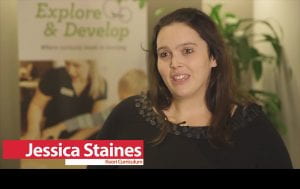
Last weekend I attended a workshop ‘Embedding Aboriginal Perspectives in Early Childhood Curriculums’ by Sydney based Jessica Staines from Koori Curriculum.  Jess is a Wiradjuri woman and educator from New South Wales. She has worked in early learning services throughout Sydney’s Inner West. She has reflected on and has a passion for the embedding of Aboriginal and Torres Strait Islander perspectives into early learning programs. She is now using that passion in supporting other educators to do the same.

Her workshop was not about music education particularly but about early childhood education in general.  I went there with the intention of getting an insight into how these special educators work with these youngest of students and children from birth to 7.  I went there to challenge myself to explore how I could better educate my pre-primary to year 2 students and to see what resources and stimuli could be gleaned for music teachers specifically.

The workshop was attended by more than 200 early childhood educators and engaged all in the importance of including Aboriginal perspectives into services programs and why it needs to be done.

It provided educators with multiple examples of experiences and provided guidance around Aboriginal perspectives programming step by step for infants, toddlers and pre-schoolers.

I came away stimulated to do better with the planning and delivery of experiences for this cohort.  It made a lot of sense to provide good messaging and learning experiences about cultural awareness and engaging all our students in the very essence of Australian education, the Australia First Nations perspectives.  If it happens in these years, no unlearning and relearning needed.

I recommend participating in Jess’s workshops or webinars.  These forums are valuable for formulating a pathway towards connecting with Aboriginal communities, which she says is critical, and for ‘finding’ the Aboriginal perspectives in different topics or learning objectives.

The workshop stimulated the following teaching ideas for our early learners.


  1. ‘The Gumtree Family’ Rewrite

Playschool is one of my favourite TV shows on the holidays, as well as Dr Phil and Selling Houses Australia.  I love its creativity.  Playschool makes me believe I can teach anything with a sense of wonder and excitement and a cardboard tube.

Justine Clarke has been a wonderful presenter and songwriter for Playschool.


One of her songs “The Gumtree Family” was played by Noongar Elder and Singer/Songwriter Fred Penny to my Indigenous Choir at Midland NAIDOC last week which put this song in my mind.


At the seminar an early childhood educator queried the whole group about ideas for embedding Aboriginal perspectives to follow the children’s interest in birds.  I recommended accessing one of the Noongar Boodja resources on birds and re-writing the Justine Clarke lyrics as below:


What’s that there, can you see?  I wonder what that thing can be?

Sitting up there in the tree, it part of the gum tree family.

Its black and white, lives in groups.

It swoops in the spring, look out, its koolbardi (magpie)

And when it’s sitting in the tree, it’s part of the Gumtree family.


It’s very small, black and white

Annoys big birds tcht tcht tcht. It’s a djiddi djiddi (wagtail)


It’s glossy black, calls out loud.

Makes this sound – caaar caaaar, yes it’s a wardang (crow).


It lives near the beach, is all white.

Likes to eat chips…. it’s a ngarlak (seagull).


It’s very tall, runs doesn’t fly.

It has green eggs, it’s a weitj (emu)


Soars up high, has brown feathers.

Is really big, it’s a waalit (eagle).

The chords for the song are in the references.


  1. Kaya My Friends Kaya

During the workshop Jess asked how many ways can you say Hello in Aboriginal languages? I knew two words from one Aboriginal language – Noongar. She asked us how many ways we can say hello in other languages?  I could think of at least 8 ways. Yes….she shamed me into action – thats good. It connected with the ‘Kaya My Friends’ song from the ‘Acknowledgement of Country’ episode of Playschool earlier this week. So…… out of that is a range of Aboriginal languages saying Hello, to go with the song.

Terms for Playschool Hello Song

(This activity should be accompanied with a map of Aboriginal languages)

Have a few children to pick one each. They can lead the rest of the group singing the song and they can point to the region where the language is from.

Hello                           Language Group                   Location

Kaya                             Noongar                                   South West WA – Perth

Palya                            Pintupi                                     Western Desert – Papunya

Budyeri kamaru            Gadigal                                    Sydney

Wominjeka                   Woiwurrung                             Melbourne

Niina Marni                   Kaurna                                     Adelaide

Jingeri                          Yugumbeh                               Brisbane

Ya Palawa                    Kani                                         Tasmania – Hobart

Yumalundi                    Ngunnawal                               Canberra

This is Kiya

It can be accompanied using the following chords.

F

Hello my friends hello.    Hello my friends hello

Bb                       F                        C

Hello my friends, Hello my friends, Hello my friends hello.

F

Hello my friends,  hello.


  1. Creative Movement To Music From Picture Book

Read a picture book to children that includes lots of animals children might experience on ‘their country’.  Even better if the book includes lots of doing words.

A book I found in the Koori Curriculum range which I had to buy for just this purpose was ‘At the Beach I See’ by Kamsani Bin Salleh. Kamsani is descended from the Nimunburr and Yawuru people of the Kimberley and the Ballardong Noongar people of the Perth region in Western Australia.  He is an emerging illustrator who reflects the natural world.

Re-read the story to music with large pauses so the children can explore the text and music through movement.  A  great piece to use would be an instrumental piece of music like the third movement of Concerto for Didjeridoo ‘Water’ from Sean O’Doyle ‘Riversymphony’.  It is available through Itunes and will expose children’s ears and bodies to a variety of different sounds and classical instruments as well as Richard Barton on Didjeridoo.


What Do You Do?

I wonder how you embed Aboriginal perspectives with your young students?  It would be great if you could share your ideas so we can learn from each other.  I wonder what songs or music or stimulus you use?


References

Adelaide https://www.adelaide.edu.au/kwp/resources/radio/201307/201307_09-Song_NiinaMarni.html

Perth Western Desert and Galimaraay – https://www.adelaide.edu.au/kwp/resources/radio/201307/201307_09-Song_NiinaMarni.html

Hobart – https://www.facebook.com/watch/?v=10155760735044218

Sydney Melbourne Canberra https://rorkprojects.com.au/languages/

https://www.narragunnawali.org.au/about/news/13/teacher-feature-jess-staines-early-learning-educator

http://www.abc.net.au/abcforkids/articles/playschoolacknowledgement.htm

video of Justine Clarke’s ‘The Gumtree Family’ https://www.youtube.com/watch?v=dNHc6MlFfHc

‘Hello My Friends’ song https://www.youtube.com/watch?v=rhXcNr–vC8

Map of Aboriginal Languages https://aiatsis.gov.au/explore/articles/aiatsis-map-indigenous-australia


Here are the chords for gum tree family

https://www.guitartabsexplorer.com/clarke-justine-Tabs/the-gum-tree-family-crd.php  

Dreaming Of A Better Place

Dreaming Of A Better Place

What are we trying to do as music educators? What is our purpose?

Ultimately as teachers we want our students to develop into adults who have a strong sense of self identity and well being, they are connected and contributing to their world, are confident and well developed learners and communicators. Instilling in our students the ability to positively influence their world is a privilege and important.

I was reminded recently at a festival in Denmark in the south of WA, how much our young people can inform those who are no longer twenty something. There are no activities for lessons in this blog. It is about refocusing our purpose and objectives for teaching music.

Two years ago two young adults formed the Koondarm Choir. This is a multinational group of young adults led by Bibbulmun Noongar man Kobi Arthur Morrison who sing to increase awareness and preserve Aboriginal cultures. The group was cofounded by Kobi and Wren Thomas, a welsh vocalist who has recently returned to the UK. The choir stemmed from ‘Tunesday’- a collaborative music evening held at Perth City Farm.

The Koondarm choir was one of the eighty groups who performed at the recent Denmark Festival of Voices where they presented two concerts and a workshop.

The choir leader and a cofounder, Kobi Morrison agreed to chat to me last week about Koondarm.

What is Koondarm?
Kobi begins our chat with clarifying the group’s name ‘Koondarm’ which is a Noongar word which ends in ‘m’ and translates as dreaming. He tells me it is not ‘koondarn’ which translates as shame. We both laugh. As he explains this distinction it suddenly dawns on me what an apt name for the group it is. As an anglo celtic Australian woman, dreaming is something that can happen whilst I am asleep or can be used to describe my hopes for the future. I have also learn that for some Aboriginal people The Dreaming is a concept where past, present and future come together.

I have had The Dreaming explained to me that it can be a vision for the future, determined by the actions of people today, that have been informed by lessons from the past from ancestors. This all seems very appropriate when thinking and talking about Koondarm the choir. Koondarm could be seen as a meeting of Aboriginal and non Aboriginal concepts which is being enacted by Australian youth on the oldest country on earth. Conceptually I find this very cool.

Background to the choir
As mentioned in the opening of this blog, Bibbulmun Noongar man Kobi Morrison and Welsh born Wren Thomas formed the Koondarm Choir. It was born out of a program at Perth City Farm called Tunesday- a collaborative music evening held at Perth City Farm. This saw Kobi engaged to run a couple of Noongar language and singing sessions. After a couple of these workshops Kobi says he got talking to his friend Wren that perhaps they should form their own youth choir, something different to Madjitil Moorna -a choir Kobi had been involved in since a child. Madjitil Moorna is a choir established by his mother, Della Rae Morrison and Jo Randell, where Kobi plays a significant role as musical director, soloist, songwriter and accompanist.

Kobi and Wren wanted a more youthful vibe with different repertoire, venues and gigs. They felt it was time for the youth to have a voice. He and Wren did not want it to be a replica of what had already been done. So they established the group singing and jamming once a month at Perth City Farm. The cornerstone values of the choir are personal, respectful and genuine connections with all choir members. The democratic organisation of the choir and its decision making, the role of technology and respect for the environment are important threads of the group. But the raison d’etre of the choir is about preservation of Aboriginal cultures through song. After using the Perth City Farm as a venue for rehearsals for two years, it is now moving to St Columbas Primary School. The choir has up to twenty young people with differing musical talents and experiences gather each month to rehearse. Performances are organic – depending on which choir members are able to attend and perform after juggling work, study and other commitments. Since formation the choir has given more than thirty performances.

Repertoire
Koondarm performs unique covers and original songs. Some songs are in Aboriginal languages and others are in English. One of the most powerful performances I have seen is their rendition of “Aparthied Freedom”. This is a song by Noongar Elder George Walley that describes clearly the injustice and cruelty of past government policies against Aboriginal peoples. It was performed by the group in Denmark where I was reminded how startling and confronting a song can be. The the use of body percussion, texture and dynamics combined to produce a brave and true performance.

I asked Kobi what Koondarm songs he would like society to hear. “I would like the world to hear and feel our performance that combines The Seekers song ‘I Am Australian’ and the Noongar chant by Noongar Performer Honey Webb ‘Nidja Noongar Boodja Koort”. Kobi would like this song to be representative of Australia. The Seekers song is anthemic. Honey Webb’s chant is beautiful. She is proud to share as it demonstrates the importance of country to her Noongar people and that Noongar culture is alive and developing within modern Australian society. The combination of the two songs as presented at Denmark is magical.

The song he would like all Australians to hear is one he wrote himself called ‘May We Love’. This was written whilst participating in a creative and cultural retreat with Madjitil Moorna choir at Roelands Mission in 2016. According to Kobi there was a wave of deep emotion with everyone who attended the retreat where different Aboriginal people told of their past experiences. He said of the experience “Whilst there I reflected on the extent of the history of the place. It spun me out that it was so beautiful yet it had been used for such terrible things”. He told me he is happy that there is some beauty flowing back into the place now. The song ‘May We Love’ is one of hope and peace and was also performed at Denmark. It is poignant and tender. Understated and humble like its songwriter. But it provides a powerful and important message for us all.

Kobi lists some of the high points of the choir so far
• Positive way the choir has been received by the music community, the general community and by Aboriginal people
• Support from Madjitil Moorna in terms of choir administration and management – he thanks Jo Randell, Cathi Payne and Kylie Bishop particularly.
• Denmark’s Festival of Voice – where the choir has featured on two occasions.

Challenges for the choir have included the initial worries about setting up, the rehearsal venue being problematic and negativity of people who are not in their best state, putting the work of the choir and choir members down.

His hopes for the future of Koondarm are that they will be recording very soon, that they will be successful in their application for grants, and to continue to spread the awareness of Aboriginal cultures and languages through song. The ultimate goal is of Koondarm’s legacy to be the group that salvages and keeps alive many different languages and cultures through the power of song. You can catch Koondarm performing at the State Library of WA where they are running a Noongar language to song workshop during National Science Week and they will be singing at the Dunsborough Song Fest over the weekend of November 8-10 in the south west of WA.

There are lessons and reminders for music educators can learn from the Koondarm experience. These include:
• Rehearsals need to be fun and social for ensembles to succeed.
• Ideas stemming from collaborations can be really great
• Ensembles can succeed where all individuals feel they are valued and where they are personally invested.
• Ensembles have a life of their own. There will be high and low points, musically and beyond.

• Knowing all your members strengths and skills can lead to interesting and musically challenging arrangements and repertoire
• Rehearsal spaces matter (we probably already know this one well!!)
• Ensemble retreats are hotbeds for creativity and bonding and building
• Youth matters – they bring energy and a vibrant can-do perspective and a lets look outside the box ideas
• You don’t need to be a full time musician in order to make good music and for your music to matter.
• Being brave builds respect
• Musicians make a difference
• Musicians can be important social and political leaders
• Musicians have a voice in modern society

Koondarm performances and workshops are strong and creative. Their arrangements are brave and passionate in presenting the deep emotions associated with sad and tragic events in our countries history and how badly governments and society have treated Aboriginal peoples. The strength of the group seems to come from how the individuals have come together to work collaboratively. The energy and hope of these young people can inform and influence music educators.

It is ago that I was an idealistically driven twenty year old with grand hopes for the future. It is easy for me now to feel jaded about the future of our world and recognise how badly some people can treat others. I find myself from time to time questioning if work in music education can really make a difference when I am working in a little corner in one school. Are any of my students listening or thinking about the music, voices and issues around them?

It has been revitalizing to hear the repertoire of this ‘Inde’ choral group. These are our future leaders gathering pace to take over from my generation. I am excited by what ‘Koondarmers’ and other young people will bring to our world. Look out for their performances and their forthcoming recordings. Remember the name Kobi Arthur Morrison – a leader in the not so distant future.


Kobi performing with mum Della Rae Morrison.

NAIDOC Week

NAIDOC Week – Voice Treaty Truth

This first section of information is from https://www.naidoc.org.au/about/naidoc-committee

The National NAIDOC organisation invites all Australians to walk with Aboriginal and Torres Strait Islander people in a movement of the nation for a better future.

On its website it states the theme – Voice. Treaty. Truth. Let’s work together for a shared future – NAIDOC Week 2019 will be held nationally from Sunday 7th  July and continue through to Sunday 14th July. Just a few days away.

Voice. Treaty. Truth. Are the three key elements to the reforms set out in the Uluru Statement from the Heart. These reforms represent the unified position of First Nations Australians.

National NAIDOC Co-Chair Pat Thompson says that for generations, Indigenous Australians have sought recognition of their unique place in Australian history and society today.

“For generations, Aboriginal and Torres Strait Islander peoples have looked for significant and lasting change. We need our fellow Australians to join us on this journey – to finish the unfinished business of this country.”

“The 2017 Uluru Statement from the Heart has been built on generations of consultation and discussions among Indigenous people – we need to be the architects of our lives and futures,” she concluded.

National NAIDOC Co Chair John Paul Janke believes 2019 is also a unique opportunity to hear this nation’s Indigenous voice with the year being celebrated as the UN’s International Year of Indigenous Languages.

“It’s time for our knowledge to be heard through our voice. – an Indigenous voice of this country that is over 65,000 plus years old.”

“They are the first words spoken on this continent. Languages that passed down lore, culture and knowledge for over millennia.”

“They are precious to our nation and need to be celebrated but it’s our voice that needs to be listened to,” he said.

The 2019 theme acknowledges that Aboriginal and Torres Strait Islander peoples have always wanted an enhanced role in decision-making in Australia’s democracy.

The theme also aims at highlighting our various First Nations’ desires for lasting and effective agreements such as Treaties, which cannot be achieved unless we have a shared, truthful understanding of the nature of the dispute, of the history, of how we got to where we stand.

“The history of our First Peoples is the history of all of us, of all of Australia, and we need to own it. Hearing this history is necessary before we can come to some true reconciliation, some genuine healing for both sides.”

“Then we can move forward together.” “So, let’s work together for a shared future,” the Co-Chairs concluded.


NAIDOC Ideas For Music Teachers

There are so many things we can do. It doesn’t have to be hard.

Allow our children and students to hear different voices, stories and truths.  Allow them to explore those ideas.  The students will create our future.  Let it be a future that brings our societies together through mutual understanding and respect.

For schools based in WA, NAIDOC Week is in the first week of the school holidays.  This makes it tricky for schools as to when to ‘program’ NAIDOC week into their schedules.  This year my school is running it in the last week of term (this coming week).  In other years, my schools have run their NAIDOC week during the first week back at school.  I don’t think this date (unlike Jan 26 J ) really matters. What matters most is that schools and teachers address the topic and engage their students.

Here are five strategies we can adopt this NAIDOC week.

  1. Teach Aboriginal songs in language
  2. Invite Aboriginal language custodians to translate songs for us to use.
  3. Play music performed and written by Aboriginal musicians/artists.
  4. Have students be prompted by Aboriginal ‘voices’ to compose their own music
  5. Invite students to write a song, write a piece of music or create a movement piece that explores some of Australia’s history from First Nations perspectives.

These actions will be detailed in turn below for different contexts.


Early Childhood

Voice could be explored by playing Youtube clip or the song from Itunes and have children sing and dance along to ‘Five Kangaroos’ by Jessica Mauboy for Sesame Street.  https://www.youtube.com/watch?v=ZsUOqvi2b4M

The video was filmed in Alice Springs with children from Yipirinya State Primary School. It’s catchy and fun.

Teach the lullaby by Karla Hart called ‘Marwit Noonook Ngan Koort’. This contemporary Noongar song features in a resource called ‘Aboriginal Songs’. The CD and book are available from the Madjitil Moorna website. https://www.madjitilmoorna.org.au/store-downloads

Ask an Aboriginal custodian to translate a song you frequently use in your context.  It could be ‘Head Shoulders Knees and Toes’ or ‘Five Little Ducks’.

To engage with Treaty students can dance and play musical instruments along to ‘Treaty’ by Yothu Yindi or to ‘Dali Mana Gamarada’ by Deborah Cheetham and the Wicked Sound Beat System.  https://www.youtube.com/watch?v=2uszdyMaC2c

There is a fabulous clip which uses the audio to Deborah’s wonderful instrumental and vocal piece.  It shows Celia Moriarty painting Deborah’s portrait sped up with the musical accompaniment. It could inspire children’s own portrait painting session of inspirational Aboriginal people. https://www.youtube.com/watch?v=CD1eB_T0UtQ

Truth telling can be tricky in the early childhood context.  There is so much tragedy and brutal history that is coming to light.  As educators we need to think carefully about the material and concepts we present to our children.  The first contact between a Desert man and white people with the Aboriginal man as the protagonist is a fantastic way to truth tell with your students.  A song called ‘Bun-Nung-Ghee by Josie Wowolla Boyle, a Wongatha Elder, Singer, Storyteller, tells the great story.  The song features in a resource called ‘Aboriginal Songs’. The CD and book are available from the Madjtil Moorna website. www.madjitilmoorna.org.au/store-downloads

Another idea is to yarn with your students about an inspiring Aboriginal person.  It could be athlete Cathy Freeman, AFL footballer Adam Goodes, artist Dion Beasley.  Have the children sing to you or the class what they remember about the stories you told them.

Middle to Senior Primary

Here is an activity which encapsulates the three themes of voice, treaty and truth. Yarn with your students about Eddie Mabo and the ‘Mabo Decision’.  Information is available  https://australianstogether.org.au/discover/australian-history/mabo-native-title/?gclid=EAIaIQobChMIgMzs8LCO4wIVxAorCh29Bg6rEAAYASAAEgJROvD_BwE.

Listen to Kev Carmody and Paul Kelly’s ‘From Little Things Big Things Grow’ song and allow time for the students to think about the song and how it tells a story, a big story.  Challenge the students to re-write and then perform the verses based on the Mabo story. Have the whole class join in with the chorus.

Secondary

A great way to have children share in Voice and Truth for secondary Music students is to listen and compare and contrast two wonderful and important songs.  The first is ‘They took The Children Away’ by Archie Roach.  The second is the re-working of the original song into ‘The Children Came Back’ by Briggs. Comparing and contrasting the musical elements is a lesson a relief teacher could run. Teacher play song one.  Students complete music elements description.  Teacher play song two. Students complete that songs’ musical elements description and then the comparison of the two songs. The videos for each of the songs are available on youtube and are great visual reinforcers with introducing the concept of ‘stolen generations’.   https://www.youtube.com/watch?v=aywDT6yHMmo

https://www.youtube.com/watch?v=3-wMbFntrTo

Heart wrenching stuff.  But there is hope presented in both of the songs and video clips.

Jessie Lloyd has developed a wonderful resource where she explores the truths of Aboriginal people who lived during the ‘stolen generations’ period between 1900 and the 1970’s. One of the songs called ‘The Irex’ shares the experience of children and adults being transported to offshore detention on the boat ‘The Irex’.  A song and arrangement of the song are available through Jessie Lloyd’s ‘Mission Songs Project’ and ‘Songs Back Home’ CD and Choirbook. Two other songs the CD and Choirbook present are ‘Our Native Land’ and ‘Middle Camp’ which are great choices to get your students thinking about Treaty. http://missionsongsproject.com/shop/

Choral

There is so much that choirs can do to engage with Aboriginal voices. Have your choir listen to ‘Universal Love’ by Della Rae Morrison.  The song features in a resource called ‘Aboriginal Songs’. The CD and book are available from the Madjtil Moorna website. Have your choir members work out an arrangement and some parts for the song.  The lyrics have been translated to Noongar by Della’s son, Kobi Morrison, a singer, songwriter, guitarist and WA NAIDOC Youth of the Year 2018.

There is Deborah Cheetham and the Short Black Opera’s Dhungala Choral Conection which includes songs and pronunciations in unison and two parts.  Deborah Cheetham’s ‘Dali Mana Gamarada’ sells as a notated choral arrangement and also a notated piece for voice with instrumental accompaniment. It translates from Gadigal to English as ‘To gather friends I embrace you and escort you into Country’. The song covers all elements of voice treaty and truth theme of NAIDOC 2019. The piece features on the Choir of Hard Knocks CD ‘Songs of Hope and Inspiration’ directed by Jonathon Welch.

Jessie Lloyd’s Mission Songs Project ‘Songs From Back Home’ is all about  the treaty theme as well as ‘truth telling’.  The choir book and CD includes four and five part arrangements ready to go.  These are vocal historical snapshots.  Important work. Good work. http://missionsongsproject.com/shop/

I would suggest all choirs should learn at least one of these pieces to form part of their main repertoire. If your choir is not ready for this, perhaps use one or part of one of these pieces as a warm up or skills-based exercise.

Instrumental

Archie Roach is a senior songman and national treasure.  For decades he has been sharing his voice and the truths of Aboriginal peoples for those willing and able to listen.  His lyrics have such poignancy and his melodies so clearly interpret his stories.  Many of his songs are available as chord charts on line.  The first one that came up when I searched ‘Archie Roach chords’ was ‘Manjana’. Using the chords of D G and C this guitar accompaniment could easily be converted into a accompaniment for other instruments.  Also playing the song could become an aural exercise – teacher plays part or all of the recording with the task for student set as ‘listen and play this back to me as best you can’.  It could also become a notation review activity where the teacher challenges their students to listen and then notate this as best you can.

Look Out For

Celebrating Voice Treaty and Truth themes is a treat coming later this year is Deborah Cheetham’s ‘Emumeralla’, a war requiem for peace.

The Australian Resistance Wars or Frontier Wars are terms historians use to describe violent conflicts between Indigenous Australians and white settlers during the British colonisation of Australia. The first fighting took place several months after the landing of the First Fleet in January 1788 and the last clashes occurred in the early 20th century, reportedly as late as 1934.

Emumeralla will be a performance of a large scale work for soloists, choirs and orchestra that Deborah has been working on for years.  It will be sung in the language of the Gunditjmara people and will be Australia’s first resistance war commemoration. It will be performed by both Aboriginal and non-Aboriginal performers. What a great reason to get to the Port Fairy Spring Festival on October 14 for its on-Country premiere.  Wow!

The work will also broadcast on ABC Classic at 1pm on July 10, 2019 during NAIDOC Week.  On youtube there is available a series of excerpts and conversation with Deborah and Aunty Vicki Couzens with Benjamin Northey the Associate Conductor of Melbourne Symphony Orchestra. I found it on the Melbourne Symphony Orchestra website.

Fabulous Films For Educators To See And Contemplate

The Song Keepers – tells the inspiring story of an Aboriginal women’s choir and their first tour of Germany. With their charismatic conductor, the choir embarks on an historical tour of Germany, to take back the baroque hymns brought to their great grandparents by German Lutherans but in their own Western Arrarnta and Pitjantjatjara languages. Together these remarkable women take their music and stories of cultural survival, identity and cross-cultural collaboration to the world.

The Tracker – The Australian outback, 1922…. four men relentlessly track a fugitive, an aboriginal man accused of murdering a white woman. When an interrogation of a small group of indigenous people turns into a massacre, paranoia sets in and the question becomes not will the fugitive be caught, but what is black and what is white… and who is leading whom? Graham Tardif composed and Archie Roach sings on the soundtrack.

Rabbit Proof Fence

In 1931, three half-white, half-Aboriginal girls escape after being plucked from their houses to be trained as domestic staff, and set off on a journey across the Outback. An emotional journey of triumph over the policy of the forced removal of Aboriginal children.

So What Am I Doing?

I am a full time Music Specialist Teacher in a primary school context on Noongar Whadjuk Country.  In class I have been preparing all students to join in singing the singing of two songs for the NAIDOC Day assembly on Monday July 1.  The first is ‘Wanjoo’, a welcome song by Noongar singer songwriter Gina Williams and the second is a Noongar translation of the chorus of Seekers classic ‘We Are Australian’.


In class all students have been exploring their own creative ideas for making a musical experience out of the book “Too Many Cheeky Animals Go Home’ by Johanna Bell and illustrated by Dion Beasley.  The students have also explored musical creative ways of expressing Dion Beasley’s life to date.  He is remarkable Aboriginal man from Tennant Creek who despite being profoundly deaf and having muscular dystrophy is a successful artist with a voice in Australian society.

In Conclusion

Embedding some Aboriginal perspective to help celebrate this week is not hard.  Choose one idea and work it into your lesson for either the whole session or part of a lesson like the warm up. Musically let us explore Voice Treaty and Truth and walk together for a better future.


References

https://www.naidoc.org.au/news/naidoc-2019-voice-treaty-truth-let%E2%80%99s-work-together-shared-futurec

www.mso.com.au/whats-on/2019/eumeralla/

https://australianstogether.org.au/discover/australian-history/mabo-native-title/?gclid=EAIaIQobChMIgMzs8LCO4wIVxAorCh29Bg6rEAAYASAAEgJROvD_BwE.

https://en.wikipedia.org/wiki/Australian_frontier_wars

https://potentialfilms.com/contemporary-movies/the-song-keepers/

https://www.umbrellaent.com.au/on-demand/3695-the-tracker-on-demand.html

https://www.sbs.com.au/movies/review/tracker-review

https://www.youtube.com/watch?v=ZsUOqvi2b4M

Hear Their Voices

Hear Their Voices

: How A Primary School Indigenous Choir Was Born

In this lead up time before NAIDOC Week I have taken some time to reflect on the theme of this year of ‘Voice, Treaty and Truth’.  I consider the development of Aboriginal voice in my context through an Indigenous Choir.  My context is a primary school is in south eastern suburbs of Perth. It is a low socio economic catchment area and there is approximately 15% Aboriginal population in a total enrolment of 650 K-6.


I wonder if this is a strategy that could work for you in your teaching environment?  Perhaps it will be to include more Aboriginal repertoire in your teaching and performance programs?


I have an Indigenous choir at my school – it is one of three choirs I run all year at my school. I am not a choral or vocal specialist.  I am not Aboriginal or Torres Strait Islander.  I run it because there is a place and an opportunity in our school for it.

For too long Aboriginal children have been invisible in schools, except for sport or in terms or remediation and attendance issues.

I saw the choir option as something I could run which would embed Aboriginal cultures at our school. I saw it also as a way to link with Aboriginal community and Aboriginal families. It could promote Aboriginal culture using the voices of young Aboriginal children. Voices of hope and possible future leaders.

The choir began organically.  It wasn’t something I set out to organise at the school, it just happened and was good so I kept it going. The resultant outcomes from running this choir have been astonishing. The strength that has developed within the children given the opportunities to identify with their culture has positively changed some of the children through attitudes and behaviour.

Yesterday this special choir performed at another school in front of students their age, staff and parents who were mostly unknown.  They knew they would be judged.  They were judged, but they were listened to and heard as well.

About eighteen months ago I approached a friend of mine, Noongar Elder and Singer Songwriter Uncle George Walley about translating the Christmas song ‘Silent Night’ into Noongar.  I had an idea of the song forming part of the whole school end of year Presentation Night.  George agreed and completed the work – which he said was tricky – and I felt a bit guilty about putting him out.  I was determined to make it worth his time and do a good job of organising an arrangement for it. I thought it best if a group of Aboriginal students learnt the song first and they would be more culturally comfortable when their peers began learning.  I held a special teaching session in my DOTT where all except two of the enrolled Year 1 to 6 Aboriginal students turned up – 63.  It was overwhelming and tricky to manage.  But the kids were obviously keen.  I asked them how they felt about singing the song first and leading the school community.  They told me this was a good idea.  So I began the Indigenous Choir where once a week most Aboriginal students would turn up and learn the Noongar lyrics and be introduced to a couple of other songs.

The students performed really well and over the summer break I decided that it was too good an experience to stop after one song and one concert.  So the choir has been going for twenty months now.  The choir has since performed at quite a few in-house events and the local school choral festival. It has been a roller coaster ride though.

One performance stands out for being positive and negative. It was their first big gig at which the choir was to perform. It was the Kodaly National Conference in Perth in October 2018.


It was a pretty daunting first big showing.  I felt the pressure.  Had I over-reached for them?  Would they be ok?  On the first Monday of the school holidays eight students turned up at 7.15am to travel for an hour and twenty minutes to be as part of the Welcome to Country for the national event. We arrived with the students spinning out over the homes located in the Presbyterian Ladies Colleges’ prestigious suburb. The area was very different from where they live. We were welcomed and led to the gym where the performance was to be held.  We met up with Elder and our singing superstar Uncle George Walley who was performing the Welcome To Country.  The choir provided choral accompaniment for Uncle George and then they performed their own songs to rapturous applause and encouragement.  The kids were literally bouncing off the walls. It had been a positive experience so far.  However I was not ready for what was to come.


We moved out to the road to wait for the bus to head home and the kids were a little boisterous and yes I let them climb the street trees because they needed to let off some energy.  A smartly dressed lady approached us from a school building on the other side of the public road that divides the PLC campus.  She didn’t look happy.  I motioned for the children to get out of the tree.  She demanded to know ‘who ARE you people and what are YOU doing HERE’.  I was fairly taken aback and said we were waiting on a public road after performing the opening of a conference and waiting for our bus.  She responded that we must move as there were students sitting their mock exams and were being disturbed.  I was SO embarrassed and angry.  The kids asked her why she was so angry.  She just walked off after telling me to ‘just take them down there’. I started to follow her and the students told me not to worry about her and that it happened all the time.  I think that made me feel even worse about the situation I had put them in.  They expected to be treated like that.  I feel guilty about it most days.  Perhaps writing this will ease some of that guilt. The kids don’t ever mention that part of the performance experience.  They talk about all the people and how we went to the park afterwards and they got slushies.


It was an eye opening experience for me, to encounter first hand how some people in our society hold themselves in a position of entitled privelage and how they percieveand treat others.  It is not an attitude I have ever embraced.  I reflect back on this incident and regret that these children were placed by me in such a vulnerable situation.


Last week we had a really positive experience. The choir performed at a nearby school as part of that school’s NAIDOC celebrations. In front of students their own age, staff and parents who were mostly unknown.  The choir knew they would be judged.  They choir were judged, but they were listened to and heard as well. The choir was applauded and given congratulations by the Principal, staff, parents and students.  They played with the students of the other school at recess.  The choir was fed a great morning tea by the staff of the school.  It had been Pyjama Day at our school so a few choir members had worn their jammies. We had a spider man in the front row and a llama in the back row.  The students and I were on a big high returning to school.  This time, no questioning our hanging around the outside of the school awaiting for transport.

We look forward to the exchange visit when the Aboriginal Dance Group of that nearby school performs for us when we celebrate NAIDOC Week.


Also we look forward to Midland NAIDOC were the choir has been given a slot in public on the main stage.  It will be during the school holidays but I don’t think there will be anyone asking us ‘who we are and what are you doing here’.

Positives Negatives and Interesting (of the Willandra PS Choir)

Positive

Yr 6 student on being asked why he wasn’t singing with the others during the choir performance at the choral festival ‘Miss I am just proud to stand with my people’.

Yr 4 student who struggles to get to class, then into class, then to sit at a desk, will come to choir and sit up and listen SO intently and behaves so well when performing with the choir

Hearing and seeing the students be proud of their culture when it has been something unspoken for so long

Hearing the children sing in Ancient languages that connects with them

Positive parent engagement

Students taking home choir booklets and sharing the songs with their families

Negative

Racism of Non Aboriginal parents at school – ‘why do they get a special choir?’ ‘I don’t want any of the P&C monies going on those kids’

Unable to find a slot in the school timetable for rehearsals – has reduced positive impact and the attendance

Unwillingness of some teachers to release students for rehearsals

One choir parent removing their two children from the choir without explanation to myself.  On the grapevine he was concerned with a couple of words I was mispronounced and perhaps some of the repertoire was too difficult.

Initial size of choir difficult to manage –rehearsals a bit wild which put off some students serious about singing well

Performances during school holidays

Community events tricky with Emergency Management Plans

Interesting

How nurturing and fulfilling the choir has been for me

How easy it was to establish and how normal it feels now

How protective I am of the students now

The issues with timetabling the choir this year has led to easier to manage rehearsals and better sound. It has also allowed for parents to sit in.

Use a lot of acapella

Is not a formal choir – more of a singalong

Willandra PS Indigenous Choir Repertoire

Noongar Translation of ‘Advance Australia Fair’

Noongar Translation of ‘We Are Australian’

‘Nidja Noongar Boodja Koort’ by Honey Webb

‘Ancient Sands’ by Kobi Morrison et al

‘Yil Lull’ by Joe Geia

‘Marwit Noonook Ngan Koort’ by Karla Hart

‘Aliwa Koolanga’ by Rhonda Collard-Spratt

Bun Nun Ghee by Josie Wowolla Boyle

Noongar Translation of ‘Silent Night’ by George Walley

‘Wanjoo My Friend’ by George Walley

‘Universal Love’ by Della Rae Morrison

Noongar Translation of West Coast Eagles Song

Noongar Translation of Fremantle Dockers Song

Conclusion

Take some time over the next couple of weeks to consider the NAIDOC theme and how you can advocate for Aboriginal voices, a treaty and truth telling.  We can work together for a better society through addressing past injustices. We have skills.  We can all do something.

Let me know what you think about my approach. Could it work for you?

Honouring Indigenous Languages

Honouring Indigenous Languages


One of the functions at the recent ‘Festival of Voice’ at Denmark included a panel discussion.

It related to issues concerning Indigenous languages. It raised the sensitive issue of language and cultural appropriation.  This is the adoption of elements of one culture by members of another culture. This can be controversial when members of a dominant culture appropriate from disadvantaged minority cultures.

This is particularly relevant for school based music teachers in Australia who are trying to implement the cross curricular priority of embedding Indigenous cultures. This is because of difficulties of music teachers trying to embed First Nations cultures without overstepping cultural lines of ownership.

It is an important topic with a wide variety of views amongst Aboriginal peoples as well as non-Aboriginal peoples.

For Music teachers we want to know what is ‘ok’ for us as non Aboriginal teachers and our students to sing and play and what is not acceptable.

This is a highly complex subject.  It requires thought and reasoning and work.  It is a personal decision for each of us to make.  There are some guidelines which are outlined later, but firstly I want to share some information about the panel discussion.

‘Honouring Indigenous Languages’ was the title of the panel discussion. The panel was facilitated by multi award winning Noongar author Professor Kim Scott who grew up near Albany a town approximately fifty kilometres from the festival host town.  The panel included representatives from two Aboriginal language groups, Noongar and Anindilyakwa, as well as from Urghur culture from southern and central Asia.

Panel Chair Professor Kim Scott

The panel discussion addressed the personal and protective relationships that people have with their traditional languages.  The panellists also shared their views on sharing traditional languages with ‘outsiders’.  This discussion about ‘outsider’s using languages was particularly was deeply emotional, especially for the Urghur representative and the Urghur audience members. This cultural group comes from the east Turkic region of south east Asia.  The culture is now controlled by China and is bordered by Mongolia, Tibet, India, Kazakhstan and Kyrgyzstan.

The panel members were prestigious and articulate.  They included Dr Richard Walley OAM among the panellists.  He is one of Australia’s leading performers and writers and the founder of Middar Theatre in 1978 which took Nyoongar culture to more than 30 countries.

Panelist Dr Richard Walley

Another panellist Joe Northover, is a Beeliargu Wilman Noongar. He was born in Collie and is a respected Noongar Elder. He has family links to the Denmark area.

Panelist Joe Northover

Rounding up the Noongar representation on the panel was Howard Riley, a respected Noongar social justice advocate.

The female representation included Emily Wurramurra.  This 23 year old young woman is from Groote Eylandt in the Gulf of Carpentaria. Emily sings original music both in English and Anindilyakwa and is passionate about preserving her culture which is why she “sings in my language”.

Panelist Singer songwriter Emily Wurramurra
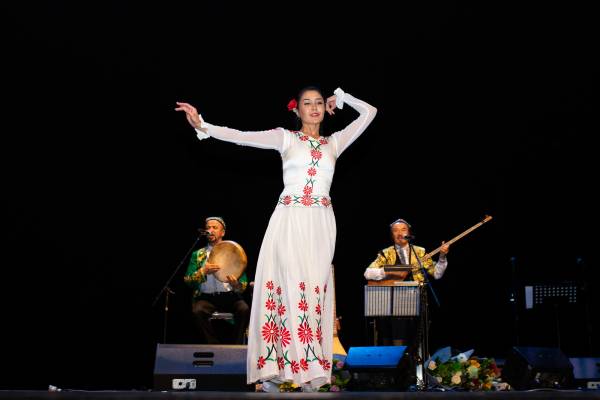
The other female on the panel was Bella Tursan, a dancer with the Turkic group Muqam Rak which presents Uyghur Culture.

Image result for muqam rakPanelist and Dancer Bella Tursan

What I gained from the discussion was the need to revisit my approach to the use of Aboriginal music, songs and stories, whether they be commercially produced or not.  The discussion highlighted the importance of sensitivity and ownership of culture.  I emphasise ‘ownership’. Acknowledgement is not enough.  Consultation needs to be ongoing.  This requires relationships to be built and maintained.  It is not easy but it is important to professionally do our job and cover our curriculum requirements.

So how can we navigate through the important protocols to ‘get things right’?

Information put out by the Australia Council for protocols for Indigenous Music is a great reference.

https://www.australiacouncil.gov.au/workspace/uploads/files/music-protocols-for-indigenous-5b4bfc140118d.pdf

It states that Indigenous music refers to music, lyrics and instrumental pieces. It also refers to Indigenous rhythms and song cycles that are created primarily by Indigenous Australian people, or based on the cultural property of Indigenous Australian people.  Indigenous music has an important place in the transmission and survival of Indigenous cultures. It has been a primary means of renewing and teaching law and culture, ceremony, storytelling, preserving language and entertainment. It is also used to record personal stories, record stories of common Indigenous Australian experience, tell Indigenous experience to the wider community, celebrate, comment on life, society and politics and many other purposes.

The protocols call for

  • the acknowledgement of diversity of cultures of Indigenous music
  • the need to respect that just because Indigenous music is contemporary, doesn’t mean it isn’t ‘Aboriginal’
  • acknowledging their innate value and their difference from other cultures, and by respecting Indigenous ownership and control of Indigenous heritage
  • respecting an Indigenous person’s connection with Indigenous heritage is expressed in contemporary life through his or her relationship with land, waterways, animals and plants, and his or her relationships with other people
  • full and proper attribution
  • Aboriginal control of the recording of cultural customs and expressions, the particular language which may be intrinsic to cultural identity, knowledge, skill and teaching of culture.

The panel discussion reminded me that I need to take care with using Aboriginal languages.

  • I need to take care that I respect them. This I can do by using the words provided by Aboriginal songwriters correctly i.e. correct pronunciation.
  • It is not my language ‘to play with’. I may use elements in a space with Aboriginal people who are comfortable with my doing so.  I may use particular words from and on country from posters and picture books respectfully and carefully and after permission sought from local community.
  • Using languages ‘off country’ needs to be handled sensitively and permission sought from local community.

I have a couple of examples from my personal experience which highlight the need to use care with First Nations languages in the music education context and how it can be complex and requires consultation and consideration.

One example is where I used traditional language even though there was some community feedback that did not want the song to go ahead. I wanted to introduce teaching ‘Wanjoo’, a contemporary song written by local Noongar singer songwriter Gina Williams.  Gina had ‘gifted’ the song for all people to use via a recording and clip including the language on youtube. I had strong connections with Noongar elders and musicians in the general Perth area and was keen to teach the song to my students.  I raised the idea with my Aboriginal & Islander Education Officer at my school who was concerned about me teaching the traditional language parts.  I then went and re-connected with the other cultural contacts who assured me it would be acceptable to use.  The elders and community members expressed that sometimes a change requires a brave leap. I went ahead.  A few months later the AIEO later referred to ‘Wanjoo” song as ‘our school Wanjoo song’ and is very happy with my teaching of language songs to date. I am convinced it was the right decision to be brave and go ahead in the face of a wary community member.  I took the comment on balance with other feedback.

Noongar Singer Songwriter Gina Williams

Another example is about myself translating a song into Noongar.  I approached a senior Noongar woman with whom I have a strong relationship to seek permission for myself to translate a well known simple nursery rhyme into the local traditional language.  She said she would think about it and get back to me.  This she did about a week later and gave me the advice of ‘not yet’.  She stated that her Elder felt it was not yet the time for this to happen. She said as a Noongar woman and my friend she had a duty to protect her culture. She also had a duty as my friend to protect me from criticism.  She said she understood the work I was doing and the spirit in which I was conducting the work.  She said not all Noongar people would know this and needed to make sure that these things happened in the right time. After receiving that advice I did not go ahead and I appreciate the ‘protection’.  Instead she worked on the translation for me. This was a valuable learning experience. I was getting too close to appropriating the culture.

Working with a language from another country can be seen as inappropriate.  I introduced the use of the Wongatha language, north east of Kalgoorlie, in the form of songs from Aunty Josie Boyle.  Due to Wongatha’s proximity to Perth and the long time Josie has lived and worked in Perth, my local community and AIEO were fine with the songs.  Some of my students had relationships with the Wongatha country which meant using the language was more acceptable.  Using songs by Shellie Morris and the Booraloola Songwomen has been trickier. The Booraloola language and country is a long way from Perth which could mean it is foreign to this land and not ok.  However for my community, because Shelly is highly respected both as a musician and for her work in remote communities, it has been accepted so far.

Wongatha Elder Josie Wowolla Boyle

I would encourage all music teachers in Australia to use Indigenous songs with their students.  But when doing so acknowledge the work, the country, the songwriters and language group.  Also talk with your community and elders where possible to ensure it is acceptable to do so.  As ‘white-fellas’ and non-Indigenous Australians we need to accept that Aboriginal people own their culture and language and music.


Remember that Australia is a vast country and the culture, unlike the English language, is not homogenous.  The languages are as diverse as the country is wide.  The culture, the languages, the people are different.  They are connected to the land, it changes.

Do your research and try to find details about where the songs and music comes from.  This will give context and understanding.

References

https://www.australiacouncil.gov.au/workspace/uploads/files/music-protocols-for-indigenous-5b4bfc140118d.pdf

https://www.denmarkfestivalofvoice.com.au

https://en.wikipedia.org/wiki/Cultural_appropriation

Music On A Mission

Music on a Mission

Denmark is a small coastal town in the south west of WA about four and a half hours drive from capital city Perth. Its population grew from the usual 2,500 to increase by another 1000 for the weekend.


Last weekend I was privileged to participate in Denmark’s Festival of Voices 2019.  Over the long weekend there were more than 80 acts, performing 200 concerts, holding 30 workshops, in 15 venues.


As a performer it was fun to be part of, as a participant and audience member it was thought provoking and challenging.


The ‘Festival of Voices’ aims to bring together local, national and international artists to celebrate the power and beauty of the human voice through song and story-telling.


The 2019 festival was themed on the United Nations ‘Year of Indigenous Languages’.  Some of the special guests and events included First Nations stories and songs from across Australia and internationally.


​The festival opened with an impressive Welcome To Country which was reportedly the biggest Aboriginal ceremony the town had experienced for over a hundred years.  When the British settled in the Denmark area it is understood that there were many atrocities committed.  Due to the sad events of the past many Aboriginal people have chosen not to go to Denmark or travel through the town.

The festival committee together with the ‘Welcome to Country’ coordinator Della Rae Morrison and Elder Eugene Eades worked tirelessly to have elders advocate for healing time for Denmark.  This brought Noongar elders who have links to the area. Dance groups, songmen and musicians presented a wonderful ceremony in language and music.

Indigenous languages and Indigenous stories from Australia and internationally were the flavour of the festival this year.


Attendance at these culturally rich performances and workshops was high.  Perhaps the high attendance reflects a shift in community interest in hearing Aboriginal voices and stories.

Over the next few weeks and through this blog I want to share three of the performing groups who featured at the festival.

Mission Songs Project – Jessie Lloyd

The first artist of the Denmark ‘Festival of Voice’ I wish to feature is Jessie Lloyd with her ‘Mission Songs Project’. Her album and choir book presenting in SATB would be one of the top three resources I would recommend to Australian Music teachers.

Jessie travelled from her Melbourne home to conduct workshops and perform at the Denmark Festival of Voices.  Her work is about truth telling through music, so all Australians can know the past of our country from Aboriginal perspectives.  It is an important and powerful work reviving contemporary Aboriginal music from 1900 to 1999.


Jessie ran a workshop where participants were invited to bring their instruments and voices to join in a mass jam session of songs from the mission era. Repertoire was chosen to share the history and strength of the Indigenous community through the music and songs from ‘The Songs Back Home’ album.

She also held a concert with supporting artists to provide a live sharing of the music treasures she has gathered regarding the mission era.  It included historical references and anecdotes.

Many of the songs gathered and performed by Jessie tell of what is more recently referred to as the Stolen Generations. The stories reveal this government policy and highlight the trauma caused by the removal of children from their families.


These works of the ‘Mission Songs Project’ are some of the few Indigenous Australian songs recorded in standard music notation.  Many music teachers find this very helpful with teaching and producing arrangements.


Because the government policies of the time meant that traditional languages were mostly not permitted to be used, most of the songs are in English.  This removes cultural complexities in terms or seeking permissions to use languages.


Included in the CD and Choir book are songs and stories teachers can use to build cultural understanding and to tick the Aboriginal perspectives curriculum requirement.

One great song is ‘Down in the Kitchen’.  Jessie explains in the notes attached to the CD that the song was written by her grandmother, Alma Geia who had been institutionalised as an eight year old.  Jessie tells that this song was a way her grandmother was able to process her experiences with humour and song.

Jessie recently sent me her recipe for coconut damper to share.

Jessie’s Coconut Damper

Ingredients:

  • 2 x cup self raising flour
  • 1 x cup powder milk
  • 1 x cup dedicated coconut
  • 1 x cup water
  • pinch of salt


METHOD:

  1. Place all dry ingredients into a large bowl
  2. Stir ingredients well and then add your water a bit at a time until it forms a ball.
  3. Put a bit of flour on the bench and knead until its one solid mass. Don’t over knead.
  4. Roll the dough into a log and cut into two pieces
  5. Put nto the oven at 200deg for 30mins, a nice and slow bake. You can tell when they are getting ready when the damper smell fills the house.
  6. Tap the top of the damper with a knife, if it sounds hollow then its ready.
  7. Leave to cool or eat warm with lots of butter.

Below are some suggested activities inspired by Alma Geia’s ‘Down in the Kitchen.  The track can be accessed by purchasing the CD ($30) and/or the choir book ($30).  It is also available on Itunes.


Early Childhood

Echo teach the song ‘Down in the Kitchen’ line by line, with actions to assist memory of lyrics.

Make some coconut damper using Jessie Lloyd’s family recipe and eat with butter and jam. Please check with your children for allergies prior to this activity.

Sing the procedure of the recipe to the tune of ‘Here We Go Round The Mulberry Bush’ using actions suggested by the children.

Verse 1 First put in the flour and salt, flour and salt, flour and salt, first put in the flour and salt, in a mixing bowl.

Verse 2 Next put in the powdered milk.. and the coconut.

Verse 3 Now its time for the water… and mix evenly.

Verse 4 Roll it out on a floured board… and roll into a blob.

Verse 5 Put into the oven…and cook until it taps hollow.

Verse 6 Cool and then its time to eat… with butter and some jam, yum.

Sing ‘Down In The Kitchen’ along while watching Jessie make damper on https://www.youtube.com/watch?v=IjL56_NLYqo

Middle Primary

Echo teach the song ‘Down In The Kitchen’ line by line, with actions to assist memory of lyrics.

Make some coconut damper using Jessie Lloyd’s family recipe and eat with butter and jam. Please check with your children for allergies prior to this activity.

Using the ingredients of the damper, teacher to model composing and performing a rap.  Provide students with some vocal beatboxing accompaniments to go with the rap. Examples could include ‘boots n cats’ or ‘buttercup’. A video reference is https://www.youtube.com/watch?v=82lD_4l2yJI

In pairs have students prepare a performance in a rap style of the recipe procedure. One student to perform the beat boxing accompaniment of their choice while the other student performs their own rap of the procedure of the recipe. Perform for another pair and/or the class.

Upper Primary to Lower Secondary

As per middle primary, but have students record their rap over a backing beat of their choice using software like garage band.


Middle to Upper Secondary

Students to listen to Paul Kelly’s ‘How To Make Gravy’.  Learn to sing and accompany the song.  Lyrics and chords to the song can be found here https://www.songsterr.com/a/wsa/paul-kelly-how-to-make-gravy-chords-s234338


Have students rewrite the song to become ‘How To Make Damper’.  Students are to research and/or take notes about the background of the song and write two verses and a new chorus.  Sing and/or learn to accompany the song instrumentally.


How My Lessons Went With The Activities

I work in a primary school setting where I have trialled some of the activities. My students loved making and singing the recipe.  Some students shared stories about how they have cooked damper and roo tail on camp fire coals.


For each class I had to adapt the recipe for different requirements – one class had a student with a milk allergy so I left the milk powder out.  All classes had a nut allergy so I included a coconut free version to be on the safe side.  Some students wanted jam and others margarine only and some just plain damper.


It was so gorgeous warm.


It was messy in a traditional carpeted classroom – I put down towels the first day and then plastic tablecloths after that. I took a dustpan and brush after the first day to assist cleaning up.


The Early Childhood activities were really successful.  They loved learning the ‘Down In The Kitchen’ song and learning the recipe by singing. The younger children were especially interested in Alma Geia and were worried about her children and grandchildren being sad about her having passed away.  Children can be so caring.


I trialled the Middle Primary activities with a Year6 class. It was less successful than anticipated, but with some adaptation to suit the particular cohort we found an option which was workable.  This particular group I am finding to be quite ‘attitudinal’ at the moment and were very difficult to motivate.  They were having difficulties in being brave enough to trial vocal sounds of the ingredients and cooking process. Use of body percussion was a more successful option with them – perhaps it was seen as less socially exposing.  This just shows we must be adaptable in our ideas and be flexible in our delivery techniques to find an option which will work with a particular group.

The Upper Primary Activity rap I trialled with a different Year 6 class. It was playful.  Student engagement and participation high.

Image result for music art peace

References

https://www.denmarkfestivalofvoice.com.au/

https://www.themonthly.com.au/issue/2017/october/1506780000/zo-morrison/mission

https://www.songsterr.com/a/wsa/paul-kelly-how-to-make-gravy-chords-s234338

https://www.youtube.com/watch?v=82lD_4l2yJI

https://www.youtube.com/watch?v=IjL56_NLYqo

Why Dont We Just Walk Together

Why Dont We Just Walk Together

The dates for NRW remain the same each year; 27 May to 3 June. These dates commemorate two significant milestones in the reconciliation journey— the successful 1967 referendum, and the High Court Mabo of 1993 decision respectively.

According to ‘Reconciliation Australia’ National Reconciliation Week (NRW) is a time for all Australians to learn about shared histories, cultures, and achievements, and to explore how all citizens can contribute to achieving reconciliation in Australia.

Reconciliation Australia believes “Reconciliation must live in the hearts, minds and actions of all Australians as we move forward, creating a nation strengthened by respectful relationships between the wider Australian community, and Aboriginal and Torres Strait Islander peoples”.

Reconciliation Week has been the topic of the last two blogs and will be again this week.  Reconciliation through music education is the central purpose of this blog.  Because of its importance to the blog I am giving it time and space.  There is a lot that can be done through music education.

More information about Reconciliation Week itself and the theme for this year can be found in the last two blogs.

This week there are some suggestions for different aspects of music education.  If you use something and it does or doesn’t work, I would love to know.  Let us share and learn from each other.

Early Childhood to Middle Primary

Objective – Children are to explore the ‘Tree of Truth’ logo through movement and responding to classical music.

Resources – copy of the ‘Tree of Truth’ logo

scarves or crepe paper streamers (one or two each)

recording of Dawn Mantras by Ross Edwards.

Activity

  • Show the logo to the children. Explore the logo with children noting the roots all jagged, then the golden pathway to the heart, how the heart touches all the people, how out of the people a bright beautiful new future is grown.
  • Students are told they will recreate this logo with their bodies and the scarves whilst music is being played. They are to find their own spot and sit down. Distribute scarves/streamers.
  • When the music starts they can begin moving and the teacher can provide verbal prompts.
  • Here is how I ran the activity with my year 1s and 2s.
Section of Music Activity
0.00 – 00.43 Develop the roots, staying low to the ground and gradually circling and moving away from the body. Small and jagged movements on the floor.
00.43 – 1.30 Roots still developing and some of the gold lines up to the heart growing. Slightly larger movements with making the roots and then small vertical lines getting bigger.
1.30 – 2.07 Love emitting from the heart. Smooth arcs to different heights for the different people. Still on the spot.
2.07 – 2.56 Can now slowly move off the spot spreading love to all corners of the world.  Watch for behaviour.  I remind students here about ‘sensible behaviour now, no being silly or make sounds or you will lose scarf/streamer.
2.56 – 3.33 Still moving slowly throw the scarf into the air and catch over and over- love is released into the wider society creating a beautiful new world.
3.33 – 3.46 Freeze movement and hold for 5 seconds and students to melt into the floor as low as they can and freeze.
3.46 Fade out music
  • Reconsider the logo with the class. Ask what was their favourite part to move to and recreate?

This scarf is available through Bundyi Culture.  Imagine a class set of these to use with your class.  Heaven. These would be amazing for an important concert performance. They retail for $89 each through their online store. https://www.bundyiculture.com.au/

I used transparent classroom ones purchased through Optimum Percussion.  They float nicely.  Set of 6 for $12.95 https://www.optimumpercussion.com.au/

Upper Primary

Objective – identify timbres and the textural changes of a song.

Resources – https://www.youtube.com/watch?v=LoRgNxvw6To ‘For Everyone’

Background Information to ‘For Everyone’ (at end of this blog)

Activity

  • Read the background information about ‘For Everyone’ to the class.
  • Play the clip then allow for some discussion if students wish to share or comment.
  • Replay clip and students are to list the timbres and instrument choices they hear.
  • As a class discuss the student findings.
  • Teacher to demonstrate how to create a textural graphic score by listening to a section of the song and model recording the timbre and textural sounds as the piece progresses. Record this on the whiteboard.
  • Here is an example

  • Allocate different sections to groups of students. In their groups they are to produce their part of a textural graph of the song.
  • Display all the graphs. Listen to the track and follow the ‘graphic score’. Discuss accuracy and possible reasoning behind textural changes.
  • PLEASE NOTE : This topic and its background information can be confronting. Teachers may need to remind students about being sensitive with what they say.  This does not mean the discussions shouldn’t happen.  They should.  Easy and uneasy truths should be shared and understood.  Sharing stories, good and bad is an important part of the theme. Reinforce this when introducing the activity with the class.

Secondary

Objective – compare timbres and the textural changes of two songs.

Resources – Clip of ‘For Everyone’ by Jordie Lane and Yirrmal

Clip of Spinifex Gum Feat. Briggs, Marliya & Senator Patrick Dodson “Locked Up”,

Background to ‘For Everyone’

Activity

  • Read the background information about ‘For Everyone’ to the class.
  • Play the clip ‘For Everyone’ then allow for some discussion if students wish to share or comment.
  • Model graphing the texture and timbre as per Upper Primary activity. Allocate different sections to groups of students.  In their groups they are to produce their part of a textural graph of the song.
  • Play clip ‘Locked Up’. Allow for comment and sharing.
  • Again allocate different sections to different groups and they are to produce their part of a textural graph of the piece.
  • Students are to study the two graphs and write down four similarities and four differences of timbre and texture of the songs. They are also to comment on what impact the texture and timbre differences make to the ‘message’ of each song.
  • PLEASE NOTE : This topic and its background information can be confronting. Teachers may need to remind students about being sensitive with what they say.  This does not mean the discussions shouldn’t happen.  They should.  Easy and uneasy truths should be shared and understood.  Sharing stories, good and bad is an important part of the theme. Reinforce this when introducing the activity with the class.

Clinton Pryor walking to Canberra

‘For Everyone’ Background Information

https://www.youtube.com/watch?v=LoRgNxvw6To – the following information was published with the release of the YouTube clip

‘For Everyone’ is a powerful song of reconciliation by acclaimed Indigenous songwriter and guitarist Yirrmal Marika and Australian indie roots artist Jordie Lane.


Directed and produced By Darius Devas. Inspired by Clinton Pryor’s incredible 6,000km Walk for Justice from Perth to Canberra in 2017, this song captures the spirit of reconciliation and is a poignant symbol of the strength of Indigenous Australia.


New generation indigenous artist Yirrmal Marika is an inspiring songwriter and guitarist with a beautiful voice, singing songs about his homeland and culture with feeling and depth beyond his years. Melbourne-born, Nashville-based Jordie Lane is widely regarded as one of Australia’s finest singer-songwriters.


‘For Everyone’ came to be when Jordie Lane created the moving score for our documentary ‘Spirit Walker – Clinton’s Walk For Justice’.


Jordie was deeply inspired by Clinton’s heroic stand for Indigenous Australia, and took it as an opportunity to collaborate with Yirrmal to write a song which captured the essence of the protest walk.


https://www.documentaryaustralia.com.au/films/4165/clintons-walk-for-justice

Young indigenous man Clinton Pryor walked from WA to Canberra to meet the Prime Minister and Governor General in the name of justice and change for his people.

“This walk is about bringing people from different cultures back together and showing that if there any hope for this country we must work together.”

Clinton’s Walk For Justice, is an inspiring short documentary following 27 year old Clinton Pryor, a young Yulparitja man from Perth. The film will document the last stages of his epic seven month 5,800km journey on foot from Heirisson Island in Perth to the Federal Parliament in Canberra. It will meet him first along the pristine East Gipsland, capturing his connection to nature and the communities he meets along the way. Pyror’s journey culminates with his historical meetings with both the Prime Minster and the Governor General at the Houses of Parliament. Clinton is an inspiring symbol for change for his people, he is an ordinary man who decided to make a stand.

“If my people gotta dream of being something in this world… Just believe in yourself… because if you can see me believing in myself walking across a whole country… I realised I had this much potential in myself… You can become something you never expected you would be.”


References

https://www.reconciliation.org.au/national-reconciliation-week/

https://www.youtube.com/watch?v=dSkQzW8xyt0  “Locked Up”

https://www.youtube.com/watch?v=LoRgNxvw6To “For Everyone”

https://www.abc.net.au/news/2017-09-03/clinton-pryor-in-canberra-after-year-long-walk-for-justice/8867968